
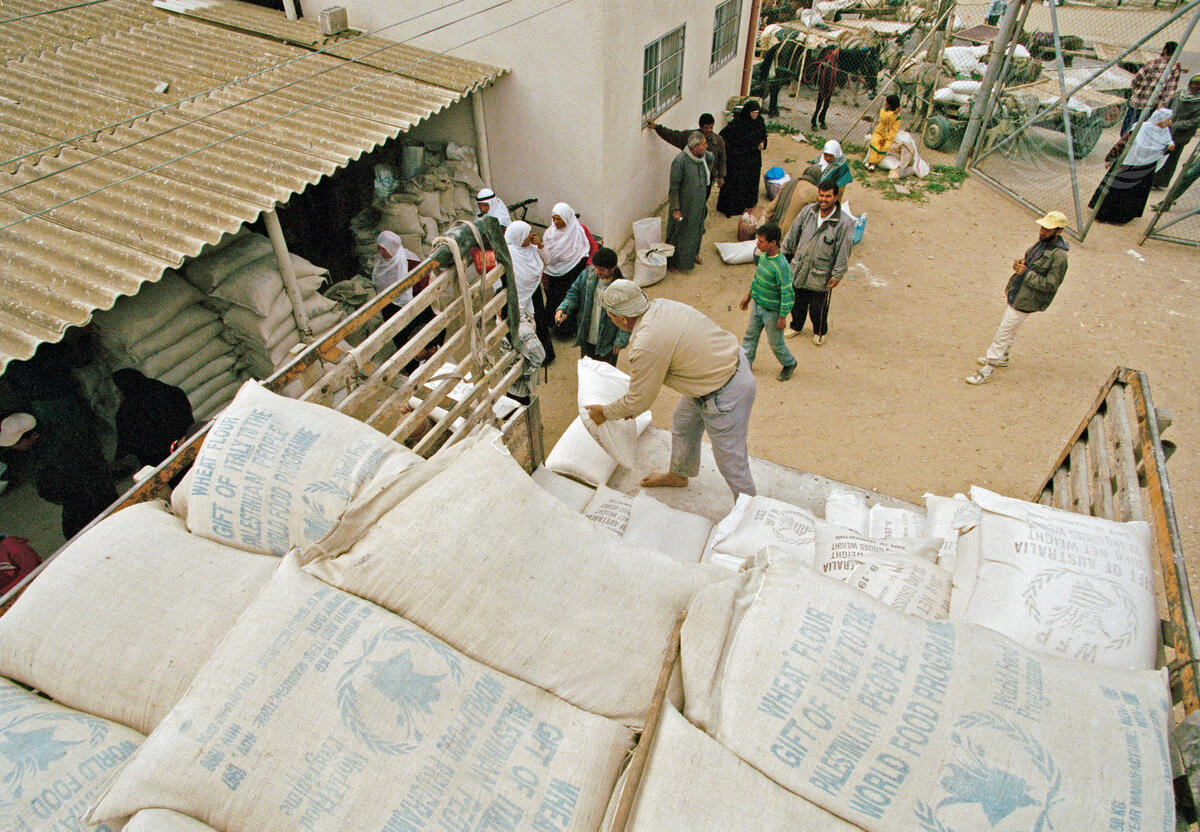
Prospects for Economic recovery and growth
Gaza faces a monumental challenge in its recovery. Immediate efforts must focus on humanitarian aid, restoring basic utilities, and providing shelter for displaced persons. Long-term reconstruction will require significant investment, international cooperation, and political stability. However, the path forward remains complex due to the
political and security situation.
Economic recovery will be key to Gaza’s long-term stability. The establishment of the Ramadan markets in Gaza are evidence of human resilience and these can provide the basis for growth. Job creation must be a priority, particularly for youth who face high unemployment rates. Reinstituting academic institutions and technical training will provide confidence and engaging youth in environmental initiatives will reconnect them to their neighbourhoods. The international community can assist by supporting small businesses and local industries, which can help foster economic growth and reduce dependence on foreign aid. Investment in infrastructure projects, such as energy production and water management, can also create jobs and contribute to the broader economic recovery.
Early Recovery Efforts
In the short term, aid will be critical to address the most immediate needs. Restoring basic services such as water, electricity, sanitation, and healthcare will be the first priority. Additionally, housing reconstruction will be essential to house the millions of displaced people. While humanitarian aid is crucial, longer-term recovery requires a strategic approach, with attention to rebuilding Gaza’s infrastructure and fostering sustainable economic growth.
Resources and References:
- Amjad, Beenish; Carrasco Nunez, Haydeeliz; Finn, Arden Jeremy; Goldman, Maya Scott. Fiscal Policy, Poverty, and Inequality in a Constrained Environment: The Case of the West Bank and Gaza. Policy Research Working Paper (2024)
- Rami Abou Jamous, Après la guerre, une autre catastrophe nous attend (2024)
- Arab Republic of Egypt, National Report (2016)
- Asian Development Bank, The Role of Special Economic Zones in Improving Effectiveness of Greater Mekong Subregion Economic Corridors (2018)
- Bahiri, S. Industrialization in the West Bank and Gaza. Routledge (1988)
- Bahiri, S. Construction and Housing in the West Bank and Gaza. Routledge (1991)
- Bank of Israel, Full Report 2023
- Bank of Israel, GDP by Industry 2006–2022
- Bank of Israel, Labour market and demography (2024)
- Bank of Israel, The Macroeconomic Forecast of the Research Division (2024)
- Barakat, S.; Milton, S.; Elkahlout, G. The Gaza Reconstruction Mechanism: Old Wine in New Bottlenecks. Journal of Intervention and Statebuilding (2018)
- Basedow, Jürgen & Kono, Toshiyuki. Special Economic Zones. Mohr Siebeck (2016)
- Buheji, Mohamed & Hasan, Aamir. Capitalising on the 'Social Capital' That Would Accelerate the Collective Wealth of Gaza (2024)
- Central Agency for Public Mobilization and Statistics – Ministry of Planning, Egypt in Figures (2020)
- Corbet, Hugh & Robertson, David. Europe's Free Trade Area Experiment. Elsevier Monographs (1970)
- Danish Trade Union Development Agency, Labour Market Profile Jordan, 2023–2024
- Dayton, Keith; James, Jeffrey; Lerman, Eran; Silverman, Robert; Warrick, Thomas. Plan for Postwar Gaza (2024)
- Dekel, Udi & Brom, Shlomo. “‘Reconstruction for Demilitarization’: Lifting the Economic Siege and Tightening the Security Siege around the Gaza Strip.” Institute for National Security Studies (2014)
- Douglas, Z. Special Economic Zones: Lessons from the Global Experience. PEDL Synthesis Paper Series (2016)
- ECES, Egypt’s Economic Profile and Statistics 2020
- ECES, Egypt’s Economic Profile and Statistics 2024
- Egypt, Ministry of Planning and Economic Development, 2030 Vision of Egypt: The National Agenda for Sustainable Development (2023)
- Farsakh, Leila. “Imagining Economic Liberation in Palestine: Challenges and Opportunities.” Omran 13, no. 49 (2024)
- Gharaibeh, Fawzi A. The Economies of the West Bank and Gaza Strip. Westview, Boulder (1985)
- International Labour Organization, Labour Force and Household Living Conditions Survey, Lebanon 2018–2019
- International Labour Organization, Lebanon Follow-up Labour Force Survey – January 2022
- International Labour Organization, School-to-work transition of young women and men in Jordan (2023)
- International Monetary Fund, Economic growth in Jordan: Retrospect and prospect (2022)
- Israel's Central Bureau of Statistics, Financial data of local authorities (2022)
- Israel's Central Bureau of Statistics, Israel Employment Report (2022)
- Israel's Central Bureau of Statistics, Israel Employment Report (2023)
- Israel's Central Bureau of Statistics, Israel in Figures 2023
- Israel's Central Bureau of Statistics, Israel Labourforce Stats 2021
- Israel's Central Bureau of Statistics, Israel Yearbook 2022
- Israel's Central Bureau of Statistics, Dealers, Jobs, Revenue, Output 2019–2020
- Israel's Ministry of Transport, Israel Ports – Statistical Year 2022
- Israeli Planning Administration, Labour and Employment – Strategic Plan for the Western Negev and the Tkuma Region (2024)
- Jordan, Department of Statistics, Jordan in Figures 2022
- Kiely, Robert. “On Special Economic Zones in Ireland and China.” In Incomparable Poetry: An Essay on the Financial Crisis of 2007–2008 and Irish Literature. Punctum Books (2020)
- Lebanon's Central Administration of Statistics, Employment and Education Statistics (2022)
- Lebanon's National Accounts, GDP by Sector 2004–2020
- Macintyre, Donald. Gaza: Preparing for Dawn. Oneworld (2018)
- OECD, Economic Surveys: Israel (2023)
- Palestinian Central Bureau of Statistics, Palestine in Figures 2022
- Roy, Sara. Hamas and civil society in Gaza: Engaging the Islamist social sector. (2013)
- RYSE, Employment and Market Systems Assessment in Jordan (2021)
- Saudi Arabia's General Authority for Statistics, GDP by Sector 2015–2019
- Saudi Arabia's General Organization for Social Insurance, Subscribers on the Job by Sector 2015–2019
- Saudi Arabia's Ministry of Human Resources and Social Development, Main data and indicators of the Labour Market (2019)
- Tannira, Ahmed. Foreign Aid to the Gaza Strip between Trusteeship and De-Development. Anthem Press (2020)
- The Seaports Industry in Israel and Operational and Service Aspects at the Port of Ashdod (2024)
- Warr, Peter & Menon, Jayant. “Cambodia’s Special Economic Zones.” Journal of Southeast Asian Economies 33, no. 3 (2016)
- World Bank, Economic Monitoring Report: Impacts of the Conflict in the Middle East on the Palestinian Economy (2024)
- World Bank national accounts data / OECD data files, Economic Data 1990–2023
- World Bank national accounts data / OECD data files, World Development Indicators by Country 1990–2023
_Page_01.jpg)
A Vision of Hope

Anthedon is the collective work of a team from the HERITOPOLIS Consortium, together with other experts addressing specific issues relevant to the Initiative and in consultation with key local professionals.HERITOPOLIS - Heritage and the Metropolis - is an open-ended research network established in 2021 to explore how metropolises are being (re-)shaped by heritage and how they are redefining its meaning. HERITOPOLIS addresses these challenges linking research and practice through the UN-Habitat UNI – University Network Initiative – MetroHUB partnership and within the framework of the Sustainable Development Goals and the New Urban Agenda.The HERITOPOLIS Society is registered in Korea as an NGO #603-82-78661 and a member of the Korean Research Foundation, www.kci.go.kr #8B4813 www.heritopolis.org
The grant for the launching stage of the Anthedon Initiative was made possible thanks to the generous contribution of Fidelity Charitable.
Disclaimer
The Anthedon Initiative does not necessarily reflect the views of UNHABITAT and the MetroHUB